Iran Thinks It’s Winning
The collapse of talks matters. But the return of the morality patrol may be the clearest sign that Tehran believes its leverage—abroad and at home—is growing.

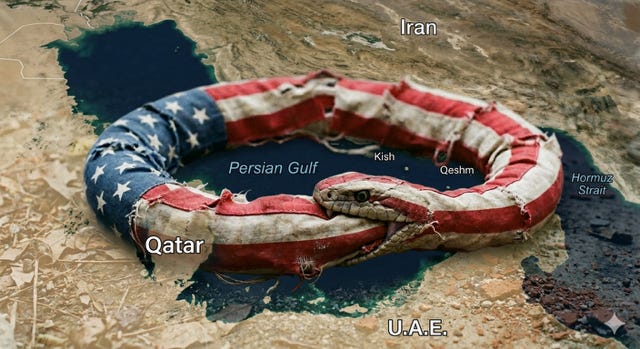
It appears the Iranian regime has taken its ball and gone home. Or closed up shop. Stormed off. Flipped the table—or simply thrown a hissy fit. Whatever metaphor you prefer.
Regardless, this is not a good development.
The newest changes to U.S. peace terms by President Trump, as reported over the weekend, were almost certainly a factor. So too were Israel’s continued military operations against the regime’s prized proxy in Lebanon, Hezbollah.
It is also, without a doubt, an indication of how confident the new Iranian leadership is in its position vis-à-vis the United States.
But there is another indicator that, taken together with Iran’s breakoff of negotiations, is particularly ominous: the reported return of the Gasht-e Ershad. This is Iran’s Morality Patrol, conducted by the IRGC Basij and responsible for enforcing female dress codes. These patrols were essentially suspended in 2022 following nationwide protests that erupted after the death of Mahsa Amini over an alleged hijab violation. Since then, a growing number of Iranian women have chosen to forgo the hijab altogether.
There are reports coming out of Iran of the recent shooting death of an Iranian woman by a Basij patrol after she refused to cover her hair at their insistence. She was reportedly visiting the grave of a family member when this occurred. If this was not simply a one-off perpetrated by an overzealous Basij unit, it is very bad news.
It is important to remember what the hijab means. The social restrictions that Imam Khomeini imposed in 1979, symbolized by the hijab, embodied the power of the Islamic regime. But over the decades, the regime was forced to use those restrictions as a safety valve—loosening and tightening enforcement in proportion to pressure coming from the streets.
If the regime has opted to resume enforcement, it means they believe they are fully back in control of the streets.
This bodes ill for the Iranian people. But it also bodes ill for the peace process.
The Iranian leadership is only getting bolder and firmer in its terms for a peace settlement. That can only come from a belief that its position—both at the negotiating table and on the streets at home—is stronger. In other words, it no longer believes the threat from America is existential.
As I wrote in my 29 May post (Why the U.S. Keeps Getting Iran Wrong), it is critical that we “understand the motives of our adversary, and how far they are willing to go when they are negotiating.” It is apparent that we have yet to reach that understanding.
Whether the regime’s confidence is justified remains to be seen. What is evident, however, is that we appear yet again to have misjudged its level of confidence, its ability to suffer pain, and its willingness to dare the U.S. to reengage militarily.
In the meantime, the U.S. administration is desperately seeking an end to a war that it is still trying to justify starting.
I enjoyed your interview on the rest of classified. For me, I can dismiss the believers in the eminent deal however, how do you respond to those that say this “walkway” is just a Iranian negotiation step and that the deal is still active and on the table? That to me implies an understanding of the Iranian positions.
You misspelled Iran.