Why the U.S. Keeps Getting Iran Wrong
We’re Stuck Because We Don’t Listen

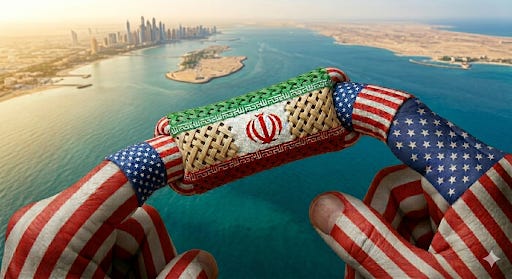
To state the blindingly obvious, the United States is stuck. Not just a little stuck. But big-time stuck. To be fair, Iran is stuck too. I guess we’re stuck together.
There’s just something about Iran and America – We just can’t quit each other.
But if we are going to make genuine progress towards peace, we need to stop assuming our adversaries see the world as we do. We have to understand their true motives. And more importantly, we have to understand how far they are willing to go when they are negotiating a deal.
The Asset
When I was the head of CIA’s Iran internal section, we had an Agent. A really good one. The real deal. He worked for one of Iran’s intelligence/security organizations. He was a volunteer, what we call a walk-in.
I can’t say where or when, for source protection even years later, but he provided reams of intelligence on issues of the highest importance to the U.S. government.
When he first presented himself, he made no bones about who he was. He slid his intelligence organization identification across the counter and said, “I want to speak to the CIA.”
He was equally direct about his motive. During his first debrief with our officer, he said: “I want money. That is why I am here.”
The Break
After he had been working with us for some time – providing stellar intelligence - he told his case officer (one of our best, fluent in Farsi) that he wanted his money, all of it. By this time, there was a sizable sum in his account, which we kept on his behalf, as is standard practice.
He wanted all of it. Not just the portions we had been providing, but the entire balance – and he wanted to take it back to Iran.
His CIA handler tried to talk him out of it for months. His demands became increasingly strident.
Senior officers within the Directorate of Operations were determined not to give in to his demands. They viewed it as too dangerous and an unacceptable loss of control.
Finally, the Agent threatened to quit.
The Meeting
I was brought in as a senior officer “from Washington” to try to talk him down. My job was to emphasize two things: how much we valued him, and why taking that amount of cash into Iran was a potential death sentence.
I emphasized that we had lost other friends like him over money, and we did not want that to happen to him. He smiled and said, “I know who you are talking about – name redacted.” (He was referring to another Agent I had worked directly with, who was now dead because of money). “We all know about him. That is the reason I am here. Because I realized how much money you were willing to pay for information. I am different. I will not be caught.”
I laid it out clearly. I explained the danger. I explained the risks to our relationship.
He listened carefully. When I finished, he looked me directly in the eyes and said, “I appreciate your concern, I really do, but I can handle it.
Then he doubled down: “I want my money! That is why I came to you in the first place. If you don’t give it to me, I will quit!”
I advised headquarters that I believed he was firm in his demand and that if we did not give him his money; he was very likely to quit. Headquarters held equally firm and refused, certain he was bluffing.
The Agent walked, and the USG lost a critical source of intelligence.
The Lesson
What is my point? You need to understand the true motives of your adversary.
Whether you are deciding whether to give an agent his money or negotiating a deal to open the Strait of Hormuz, you must understand, truly understand, the lens through which they view the world. If you ignore their stated motive because it doesn’t align with your “risk management” framework or fails to address your political agenda or feed your ego, you aren’t actually solving the problem – you are merely setting the stage for the next disappointment.
It is clear from recent events – where we have yet again been promised a DEAL that has failed to materialize – that the Iranians have a far better understanding of their U.S. counterparts – and what truly drives them, or more accurately him – than we do of them.
Does this dynamic explain our current stalemates here and elsewhere? Or is there something uniquely stubborn about the U.S.-Iran relationship?
So… I guess the real question is, what does Iran truly want. And has it changed due to recent events on the ground and a change in leadership?
Let’s discuss in the comments.
And share this with others who follow the Middle East.
Time for a time out, prolong the ceasefire, and kick the tough issues down the road. Seems to be where this is all going. Hostilities will probably resume eventually. Get ready for a long-term “mowing the lawn” strategy from Washington — a low-key forever war.
Great anecdote and thesis! In choosing this conflict and manner of use of force, Trump has harmed his objective, which remains unclear and contradictory. Where Trump has put the U.S. in a geopolitical hurting position, Iran is not hurting yet to the point they need mediation or reconciliation in the form of a cessation of the conflict. Tehran controls the clock and the geography. Short of using nukes, Trump has few if any rungs left on the escalation ladder. To say, it’s less about understanding what the mullahs want and more about what they’re willing to do to gain from the war having already won Trump’s game of chicken. The asset you mention knew what he wanted and would not be dissuaded; Tehran has the same disposition in this conflict of Trump’s choice.